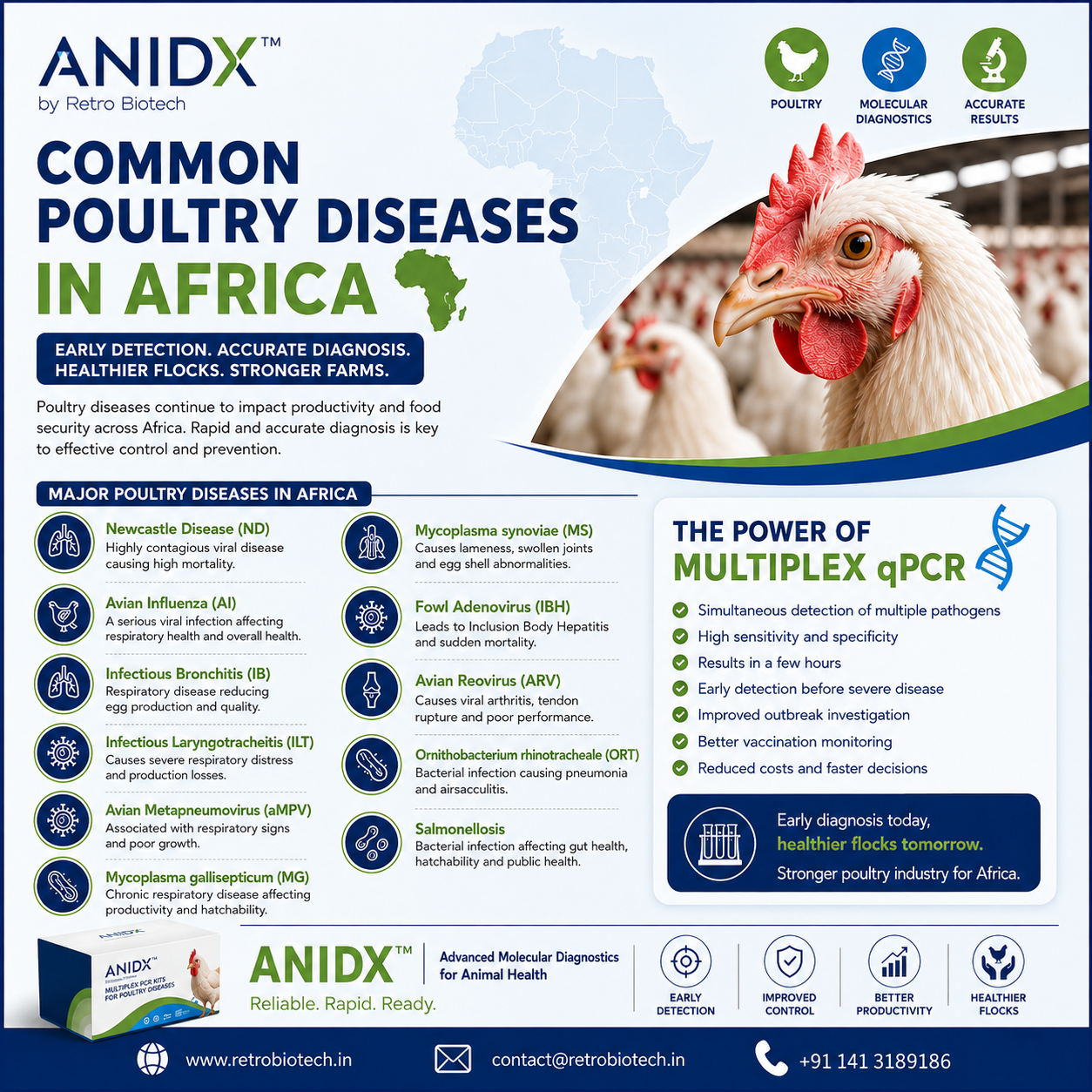
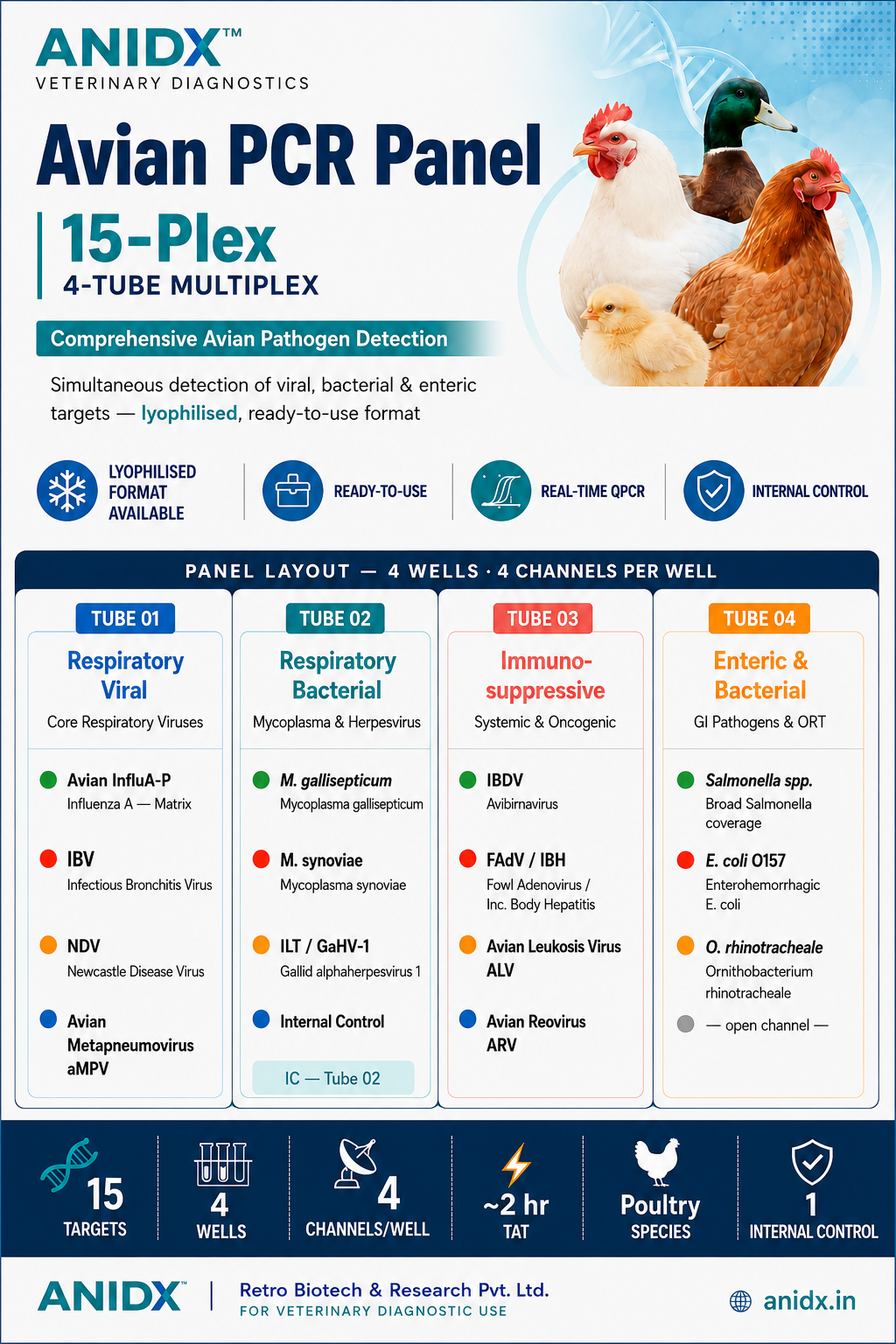
Africa's poultry sector is experiencing rapid growth, driven by increasing demand for affordable animal protein, expanding commercial farming, and government initiatives to strengthen food security. However, infectious diseases remain one of the biggest challenges limiting poultry productivity across the continent. Disease outbreaks result in high mortality, reduced egg production, poor feed conversion, lower hatchability, and substantial economic losses for farmers.Many poultry diseases share similar clinical signs, making accurate laboratory diagnosis essential for effective treatment and disease control. Modern molecular diagnostic techniques, particularly multiplex real-time PCR (qPCR), provide rapid and highly sensitive detection of multiple pathogens from a single sample, enabling veterinarians and producers to respond before outbreaks spread.Why Poultry Diseases Are a Major Challenge in AfricaSeveral factors contribute to the high prevalence of poultry diseases across African countries:Rapid expansion of commercial poultry farmingMixed farming systems with limited biosecurityLive bird markets and frequent bird movementInteraction with wild and migratory birdsWarm climate supporting pathogen survivalLimited access to rapid diagnostic laboratoriesDelayed disease reportingStrengthening disease surveillance through molecular diagnostics is becoming increasingly important to protect poultry health and improve farm profitability.Most Common Poultry Diseases in Africa1. Newcastle Disease (ND)Causative Agent: Newcastle Disease Virus (NDV)Newcastle Disease is one of the most devastating poultry diseases in Africa and remains endemic in many regions.Clinical SignsSudden mortalityGreenish diarrheaRespiratory distressTwisted neck (torticollis)ParalysisSharp decline in egg productionRecommended SamplesTracheal swabOropharyngeal swabCloacal swabBrain and lung tissue2. Avian Influenza (Bird Flu)Causative Agent: Influenza A Virus (H5, H7, H9 and other subtypes)Highly Pathogenic Avian Influenza (HPAI) causes significant economic losses due to rapid transmission and mandatory control measures.Clinical SignsSudden deathFacial swellingCyanosis of comb and wattlesRespiratory distressDrop in egg productionEarly molecular diagnosis is critical for outbreak containment.3. Infectious Bronchitis (IB)Causative Agent: Infectious Bronchitis Virus (IBV)IB primarily affects the respiratory tract and reproductive system.Clinical SignsSneezingCoughingNasal dischargePoor eggshell qualityReduced hatchability4. Infectious Laryngotracheitis (ILT)Causative Agent: Gallid Herpesvirus-1ILT causes severe respiratory disease, particularly in layer and breeder flocks.Clinical SignsGaspingBloody mucusOpen-mouth breathingIncreased mortality5. Avian Metapneumovirus (aMPV)Clinical SignsSwollen head syndromeNasal dischargeRespiratory diseasePoor weight gainSecondary bacterial infections are common.6. Mycoplasma gallisepticum (MG)MG is responsible for chronic respiratory disease and significantly affects flock productivity.Clinical SignsCoughingSinus swellingReduced egg productionPoor feed conversion7. Mycoplasma synoviae (MS)MS affects both respiratory and musculoskeletal systems.Clinical SignsJoint swellingLamenessEggshell abnormalitiesRespiratory signs8. Fowl Adenovirus (IBH)Fowl Adenovirus causes Inclusion Body Hepatitis, especially in young broilers.Clinical SignsSudden mortalityEnlarged liverDepressionPoor growth9. Avian ReovirusClinical SignsViral arthritisTendon ruptureLamenessReduced flock performance10. Ornithobacterium rhinotracheale (ORT)ORT commonly occurs alongside viral respiratory infections.Clinical SignsPneumoniaAirsacculitisRespiratory distressReduced productivity11. SalmonellosisCausative Agent: Salmonella speciesSalmonella affects both poultry production and food safety.Clinical SignsDiarrheaSepticemiaPoor hatchabilityIncreased chick mortalityCo-Infections Are More Common Than EverMany poultry outbreaks involve multiple pathogens simultaneously. Birds infected with one organism are often more susceptible to secondary infections, resulting in greater production losses.Common combinations include:Newcastle Disease + Infectious BronchitisMG + MSAvian Influenza + ORTIBV + aMPVFowl Adenovirus + ReovirusNDV + Avian InfluenzaTesting for only a single pathogen may overlook the true cause of disease, making multiplex molecular diagnostics an important tool for comprehensive flock health assessment.Advantages of Multiplex Real-Time PCRCompared with conventional diagnostic methods, multiplex qPCR offers several important benefits:Detects multiple pathogens in a single reactionHigh analytical sensitivity and specificityResults within a few hoursEarly detection before widespread clinical signsSupports targeted treatment and vaccination decisionsImproves outbreak investigationsReduces overall laboratory costs and turnaround timeRecommended Samples for Poultry PCR TestingFor the highest diagnostic accuracy, laboratories commonly test:Oropharyngeal swabsTracheal swabsCloacal swabsLung tissueTracheaLiverSpleenKidneyEnvironmental samples (where appropriate)Proper sample collection, storage, and transportation are essential for reliable molecular results.The Future of Poultry Disease Control in AfricaAs poultry production continues to expand across Africa, rapid disease detection and effective surveillance will play an increasingly important role in protecting flock health and improving productivity. Integrating multiplex real-time PCR into routine veterinary diagnostics enables earlier detection of infectious diseases, faster outbreak response, and better-informed disease management strategies.Investment in advanced molecular diagnostics will help reduce economic losses, strengthen food security, improve animal welfare, and support the sustainable growth of Africa's poultry industry.About ANIDX™ by Retro BiotechANIDX™ is the veterinary molecular diagnostics portfolio of Retro Biotech, offering advanced multiplex real-time PCR solutions for poultry, livestock, equine, companion animals, and aquaculture. Designed for veterinary laboratories, research institutions, and animal health professionals, ANIDX™ panels deliver rapid, sensitive, and reliable detection of multiple pathogens in a single assay, enabling faster clinical decisions and more effective disease surveillance.Frequently Asked Questions (FAQ)Which poultry disease causes the highest mortality in Africa?Newcastle Disease remains one of the most economically significant poultry diseases across many African countries, although Avian Influenza outbreaks can also cause severe losses.Why is multiplex PCR better than traditional testing?Multiplex PCR detects several pathogens simultaneously with high sensitivity, providing faster and more comprehensive results than conventional diagnostic methods.Which samples are best for poultry PCR testing?Tracheal, oropharyngeal, and cloacal swabs are commonly used for live birds, while tissue samples such as lung, liver, spleen, and kidney are preferred during post-mortem investigations.Can one bird be infected with multiple pathogens?Yes. Co-infections are common in commercial poultry and often result in more severe disease and greater production losses.
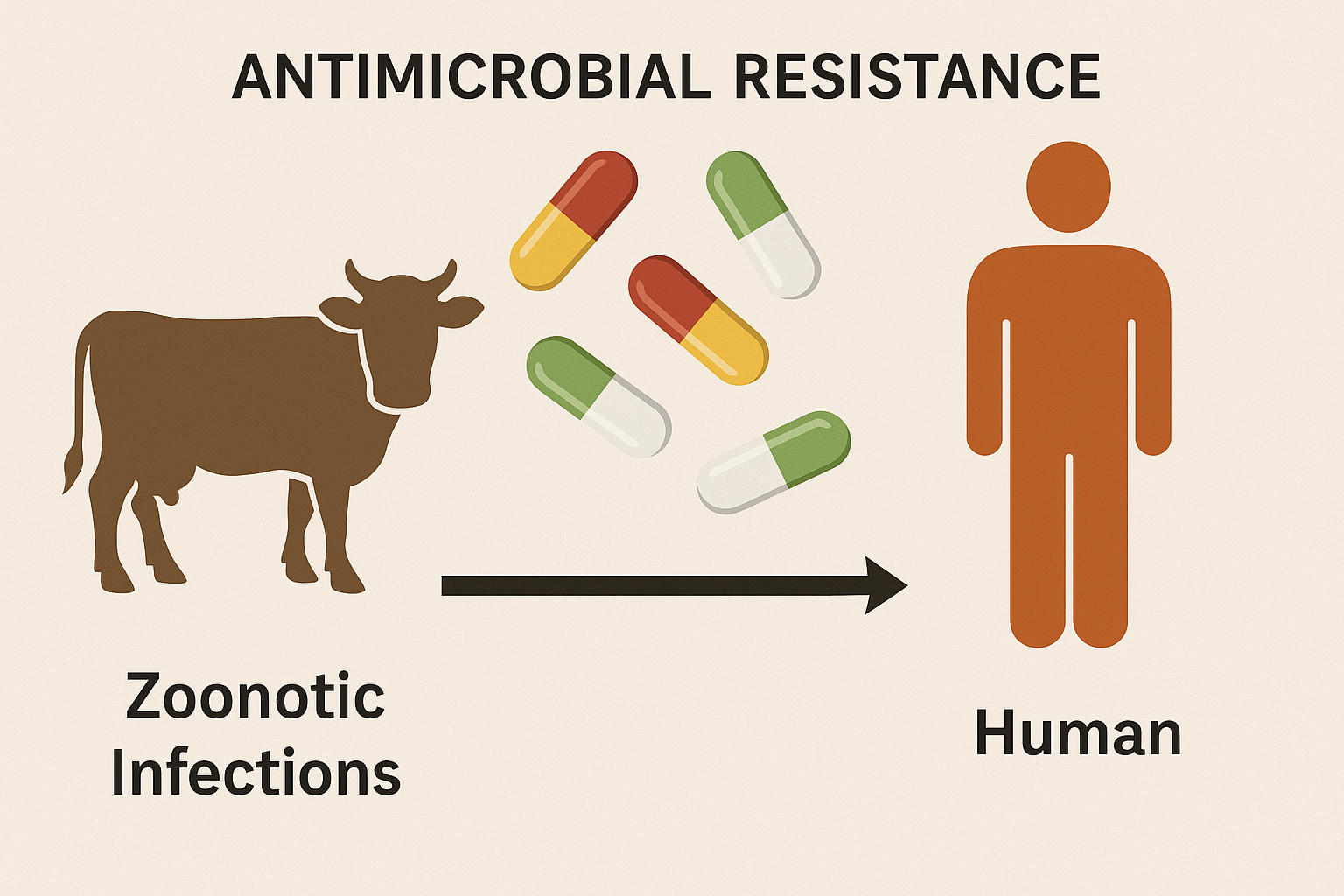
 Anti Microbial Resistance Marker